

Characters
Short character introductions in alphabetical order. More characters are added as they are introduced in the story.
- INDEX
Kishan imperial family
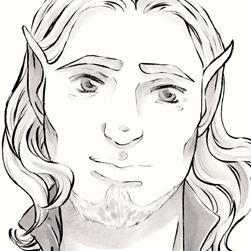
Chuja mar Verqur’einen
Ren’i’s uncle, Oerei and Ellerram’s brother. Married to lady Nahere. He has a great interest in the arts, and mainly focuses on supporting performance arts and poetry within the empire.
Ellerram IV mar Verqur’einen
The empress to the ruby throne of Kisha. Oerei and Chuja’s younger sister and Ren’i’s aunt. Crowned after the death of her younger sister, empress Mushar. Widowed after the sudden passing of prince-consort Mitae, her husband.
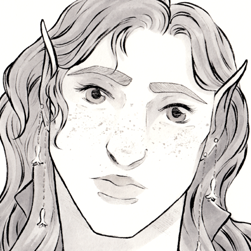
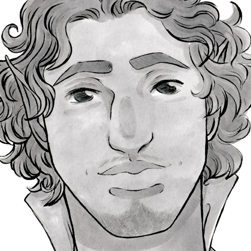
Mitae vyl Zlarovei Zlavyshi
Ellerram’s late prince-consort. The son of an upper class family from the city of Zlarovei, located in the first military district of Liqaria.
Mushar I mar Verqur’einen
Empress before Ellerram’s reign. Ellerram, Chuja and Oerei’s younger sister. Crowned at the mere age of 125, unusually young for a taivashi.
Nahere Karanese
Wife to prince Chuja. A former court poet from the Harem Institute of Arts, now an independent artist, musician and historian. Her official title is lady Nahere.
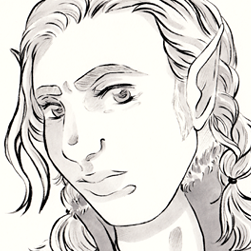
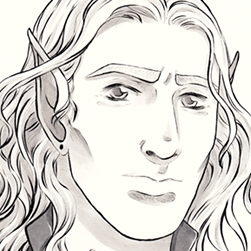
Oerei mar Verqur’einen
Ren’i’s father and the empress’s eldest brother. Sits in the Kishan senate on top of his imperial duties and actively participates in politics.
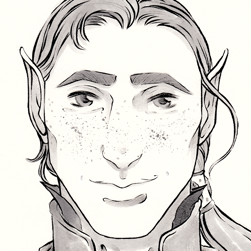
Ren’i mar Oereinen
The crown prince of Kisha and nephew to the empress of the ruby throne. Commander-in-chief of the imperial army and the empress’s right-hand man, nicknamed “Ironfist”.
Verqur’ei XI mar Taniarienen
Ren’i’s grandfather, and the late father of Ellerram, Mushar, Chuja and Oerei. Emperor of the ruby throne before Mushar’s reign, and the only child of emperor Taniarie.
Hytherlanders
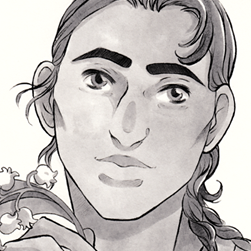
Ared
Hatam-Ile’s chief, cousin to Hawk and brother to Nightsong. Named the chief of chiefs for the entire akheri people at a young age due to his fire reading skills.
Blueleaf
Scout and hunter from Hatam-Ile, sibling to Dewdrop.
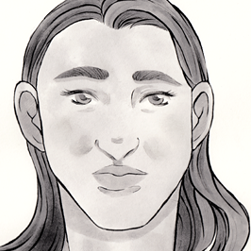
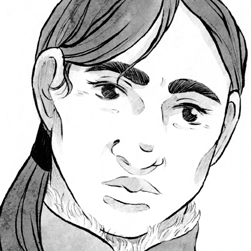
Denae
Huntsmaster and tracker from Verem.
Dewdrop
Scout and hunter from Hatam-Ile, sister to Blueleaf.
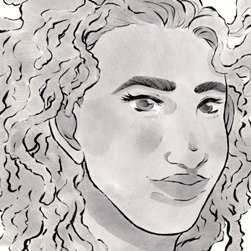
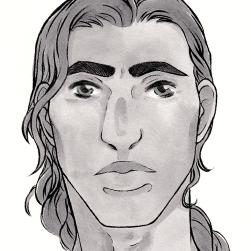
Hawk
A hunter from the akheri city of Hatam-Ile. Cousin to Ared and Nightsong.
Mineha
A healer from Hatam-Ile.
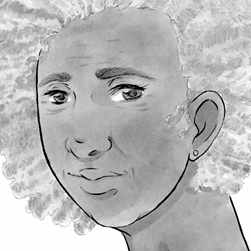
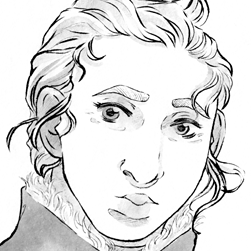
Moonstone
Scout and quartzsmith from Om-Var.
Nemeken
Leader of Hatam-Ile’s council of elders and the eldest akheri in her city. Wife to Mineha.
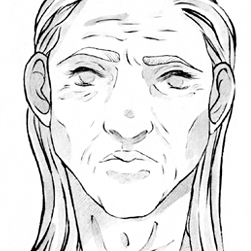
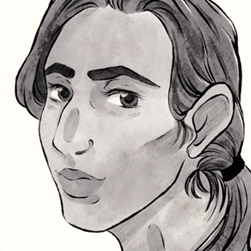
Nightsong
Sister to Ared and cousin to Hawk. Silverbrook’s wife.
Onniar
The huntsmaster of Hatam-Ile. Hawk’s former teacher and close friend.
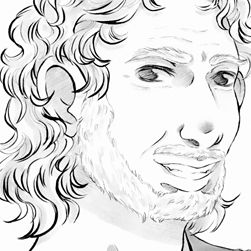
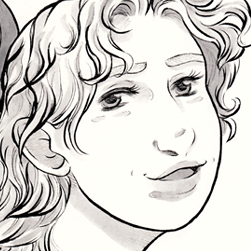
Silverbrook
Scout and hunter from Hatam-Ile. Nightsong’s wife and a close friend of Hawk’s.
Willow
Hunter from Hatam-Ile and a friend of Hawk’s.
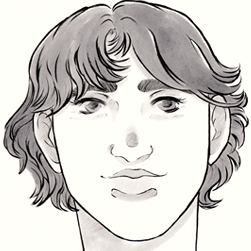
Other characters
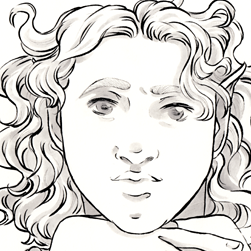
Alara
A full-blood taivashi dancer from the Kishan harem. A close friend of Ren’i’s and his former lover.
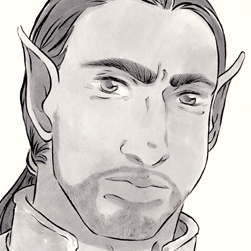
Hamr
Captain of the Guard of Honour, as well as Ren’i’s advisor and friend. Has served long in the imperial army even before being appointed the captain of the Guard.
Kha’ar
One of the consuls of the Fifth Legion.
Linnee
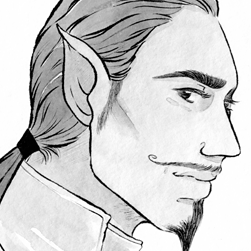
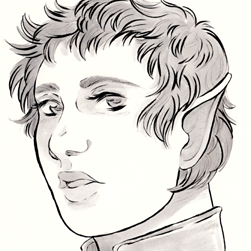
One of Ren’i’s Guards of Honour, and one of his closest military companions.
Maral
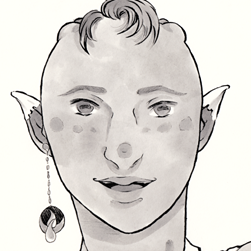
A merjil musician from the Kishan harem and a close friend of Ren’i’s.
Qel
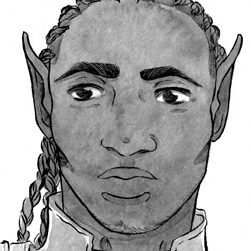
One of the consuls of the Fifth Legion.
Ruan
Ren’i’s personal valet. Responsible for ensuring that the crown prince is presentable in formal occasions.
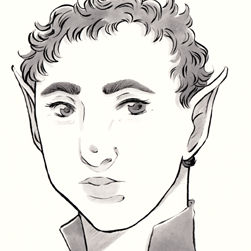
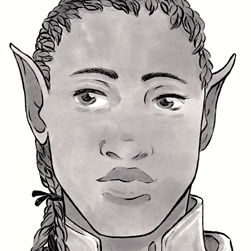
Sava
One of Ren’i’s Guards of Honour, originally from Meril-An. One of Ren’i’s closest military companions.
Vannuil
One of the consuls of the Fifth Legion.
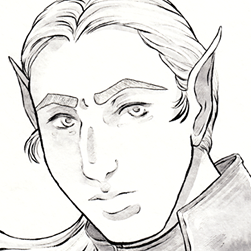
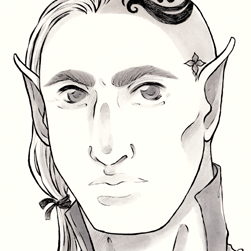
Vasaqin
Captain to Ellerram’s bodyguards (and former Guard of Honour).
Verra
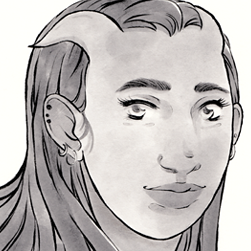
An asari singer from the Kishan harem. Friend to Alara and Maral.
Yurau
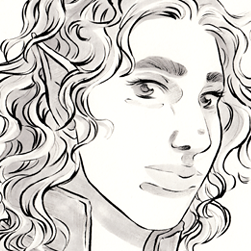
One of Ren’i’s Guards of Honour, and one of his closest military companions.
The Eight Gods
Ahnin
The goddess of winds and the primordial seas, said to have calmed the currents that raged in the young planet’s oceans with her will, taming them to make passage across the seas safer. Her spirit is believed to still visit Melkem in the form of storms.
Kauarin
The goddess of the Tuonela – the Underworld – and death whose statue stands at the Falls of the Eight. It is between the feet of the statue that the River of the Eight flows deep inside the mountain caverns. The mouth of the cave and the river itself are said to be the gateway to the Underworld, Kauarin’s domain. In the Liqari tongue she is known as Qaharin. Her name comes from the word ‘kaukainen’ in Old Demonic, meaning ‘distant’, for it is believed that she turned her back on the other gods and vanished, never to be seen again. The moon Kauarin is named after her, as it is seemingly the most distant of Melkem’s moons in the night sky thanks to its small size.
Khuus
According to legend Khuus and his lover Tari ripped the landmass of the primordial continent from the bottom of the sea and raised it above the waves, forming a brand-new land. Their hands are said to have shaped the new continent together, turning it lush and fertile. Khuus was the god of rhythm, dance and poetry who adored the arts of his people. It is said that he did not die but fell into an everlasting sleep, and that the mountains of Khuusia in Liqaria formed around his body, guarding his rest. There are many legends related to the tale of Khuus and Tari: it is said that when they joined their hands and ashays they were capable of wonders none of the other gods could match. Therefore almost all famous paintings and statues depict them holding hands, forever as one as a sign of worldly and heavenly love, and of creation.
Najdur
The god known better by the moniker the One-Handed, because their most well-known statue is missing an arm. The merjil people respect them greatly, for they settled permanently among the merjils in Nemerwatan. They and their brother Quan were always close, but Najdur chose not to partake in any squabbles between the other gods, instead dedicating themselves heart and soul to their new people. They possessed strategic intellect and had a great liking for the merjil language and philosophy, which they studied to found the basis for the regime and social theory still followed in Nemerwatan to this day.
Mashoer’an
The goddess who became known as the gatekeeper. According to legend she permanently closed the rift between worlds that had made the gods’ escape from their homeworld possible, ensuring they could not be followed. Because of this it is believed that she rules over liminal spaces, transitional periods and rites of passage, and her images are often seen in Kisha around the Spring Festival when young Kishans turning 26 take the first step into adulthood. It is therefore not surprising that some cultures link her with death, rebirth and the Underworld alongside Kauarin.
Merenos
One of Melkem’s moons is named after the god Merenos. In Kisha he is called the Apostate, whereas the mereshi of Awa honour him as their progenitor and have taken their name from the same Old Demonic word as Merenos himself – ‘meri’, meaning ‘sea’. Merenos is rumoured to have been either Quan’s brother, lover, or even both, depending on the myth, but not enough lore has survived for any of these theories to be proven. Merenos lifted his kingdom of Awa to the skies to prevent Quan and his Kishans from waging war against him. Despite the title of Apostate, it is with Merenos’s words that the most well-known song of Kisha’s Spring Festival begins, depicting the gods arriving on Melkem and the wonders they worked to shape the planet: “Quan, blood of my blood, flesh of my flesh, closer than kin! Thus join thy hand with mine, thy nature with my nature, thine ashay linked with mine, and quell the raging of these seas.”
Quan
The ancestor of Kishans and the founder of the Kishan nation. He is seen as the god of fire, capable of calling forth storms of fire and staunching flowing rivers of lava with his ashay. He is said to have taught the secrets of making fire to the other species of Melkem. One of Melkem’s moons is named after him. He declared Merenos an apostate after the latter had separated Awa from the rest of Melkem, ordering all images of him and all writings he’d penned to be destroyed, and forbade his people all contact with Merenos’s people.
Tari
A god, best known as Khuus’s lover. Many tales are told of him, and the tragic love between him and Khuus has inspired countless ballads and epics all over Melkem. Tari’s two hands are often depicted doing two different things – his other hand touching the night sky, the other the earth to symbolise the homesickness for his former home and his current connection to Melkem, the place Khuus has already made his new home, meaning Tari cannot ever return either. In other versions his other hand plays the harp, the other the drum as a symbol of all things beyond worldly and heavenly. Tari was the worldliest of all the gods and lived among common people, learning their languages and customs. It is said that Tari still holds Khuus’s head on his lap. The Liqaris believe that the two tallest peaks of the Khuusian mountain range are the two gods, and the snow of a countless centuries gathered between their two forms are Tari’s frozen tears.
Name and pronunciation guide
There are some things regarding the pronunciation of names in The Threefold Soul that might puzzle English-speaking readers. The trilogy was originally written in Finnish and the pronunciation therefore follows Finnish conventions, so the following are only intended to highlight the most common pitfalls.
Ch – pronounced like kh, very similar to ch in ‘charisma’.
J – pronounced like y in ‘yes’, for example Chuja is pronounced [khuya].
Q – pronounced like k in ‘key’, for example Quan is pronounced [kuan]. There is no phonetic difference between the letters q and k in modern Daqanese, the language spoken in Kisha and most of the northern continent.
Y – no direct equivalent in English, but comes close to the German ü sound.
Ä – pronounced like a in ‘hat’. Especially common in Liqari words and names.
An apostrophe (‘) indicates a break between syllables, specifically between two vowels (Kisha’er), or a consonant and a vowel (Ren’i). There is a small pause between the syllables, so the name Ren’i is pronounced as [ren-i] instead of [reni] because ‘ren’ is one syllable and ‘i’ is another.
Every letter is pronounced, including double vowels and double consonants. You can look up Finnish pronunciation guides online if you’re curious about what this sounds like.